
Food Additive Suppliers
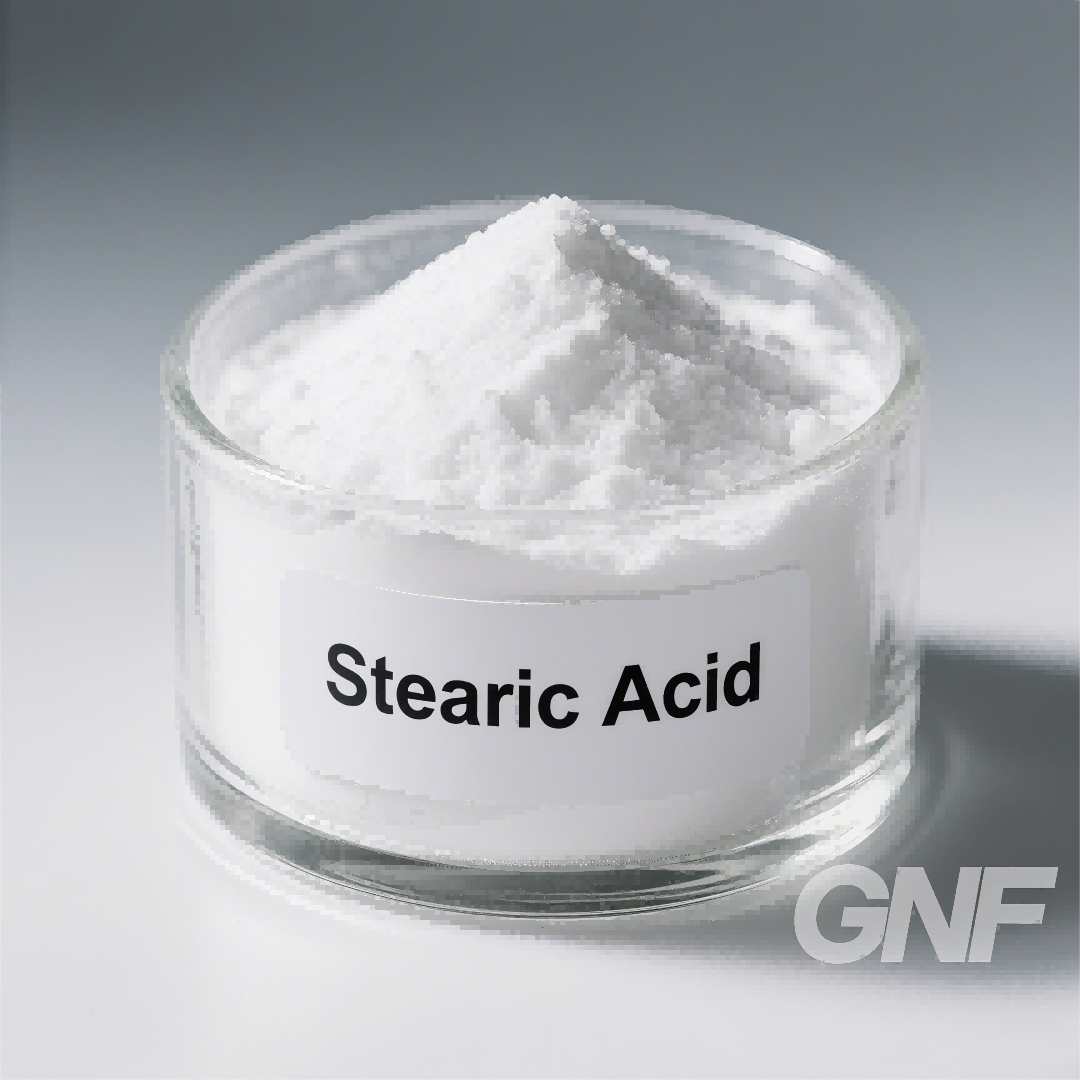
GNF Food additives Stearic Acid CAS 57-11-4

GNF Food additives Stearic Acid CAS 57-11-4

Introduction

Stearate salts (such as calcium salts, magnesium salts and potassium salts) are widely used in the food additive industry as anti-caking agents. The hydrolysis products of glycerol mono-stearate can participate in body metabolism and have been globally recognized as a non-toxic food additive.


  • Item No :

    57-11-4
  • Order(MOQ) :

    1000kgs
  • Payment :

    T/T;LC;CREDIT PAYMENT
  • Product Origin :

    China
  • Color :

    white
  • Shipping Port :

    Main Port,China
  • Lead Time :

    All The Way Around
  • Weight :

    25KG/BAG

Specification

Testitems

Specification

Results

Appearance

white or yellowish hard solid,and soluble in the ethanol

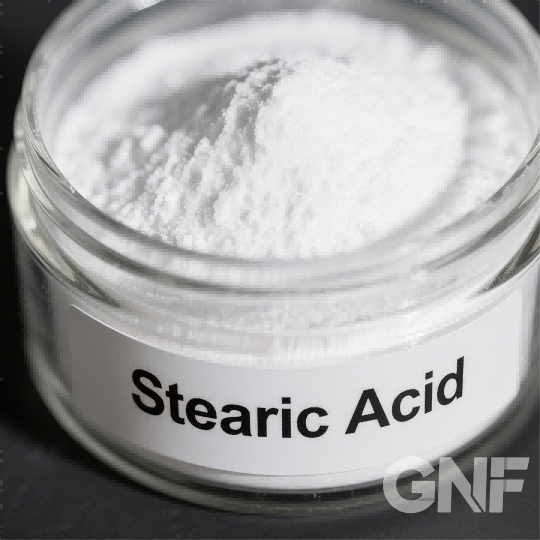
White powder

Acid Value (in KOH) (mg/g)

196-211

210.6

Iodine value (in terms of I) / (g/100g)

≤7.0

0.11

Saponification value (in KOH) (mg/g)

197-212

209.5

Loss on drying(w/%)

≤0.2

0.01

Residue on ignition(w/%)

≤0.1

0.01

Non-saponification(w/%)

≤1.5

0.13

Crystallization point(℃)

54.5-69

55.3

Lead (Pb) / (mg/kg)

≤2.0

0.22


Application


Daily chemicals / Cosmetics: Used as emulsifiers and thickeners in creams, lipsticks, and soaps to stabilize ingredients, improve skin feel, and adjust hardness. Plastics / Rubber: Serves as lubricants and mold release agents (for plastics) and vulcanization activators (for rubber), optimizing processability and enhancing the performance of finished products. Food / Feed: In food, it prevents oil separation and aids in mold release (e.g., for chocolate and baked goods); in feed, it improves formability and helps with vitamin absorption.


FAQ

1:Is stearic acid suitable for vegan products?

Yes. Our GNF food-grade stearic acid is derived from vegetable oils (palm oil / vegetable fat), making it suitable for vegan chocolate, plant-based ice cream and other vegan food formulations.


2:What is the typical dosage of stearic acid in food?

The addition amount is generally 0.1%–2% depending on the product. For chocolate and ice cream it is 1%–2%; for powdered food anti-caking use it is 0.3%–1%.


3:Does stearic acid affect the taste of food?

No. Within the recommended dosage, stearic acid improves smoothness and stability without leaving an unpleasant taste. It helps chocolate melt properly and enhances creaminess in dairy products.


4:What certifications does your stearic acid have?

GNF food-grade stearic acid supports SGS test reports, ISO 9001, ISO 22000, Halal, Kosher and food additive production qualification to meet global market access requirements.


5:Can stearic acid be used in high-temperature food processing?

Yes. It has good thermal stability and is widely used in baking, frying and extrusion processing without decomposition or affecting product performance.


6:How should stearic acid be stored?

It should be stored in a cool, dry and ventilated place, sealed and protected from moisture, high temperature and direct sunlight. Under proper conditions, the shelf life is normally 24 months.

leave a message
If you are interested in our products and want to know more details,please leave a message here,we will reply you as soon as we can.
Submit

Related Products

Reagent Grade Industrial Grade Food Additives Grade EDTA 4Na CAS 13235-36-4
Introduction CAS NO. 13235-36-4 White crystalline powder is soluble in water and can chelate with various metal ions.
read more
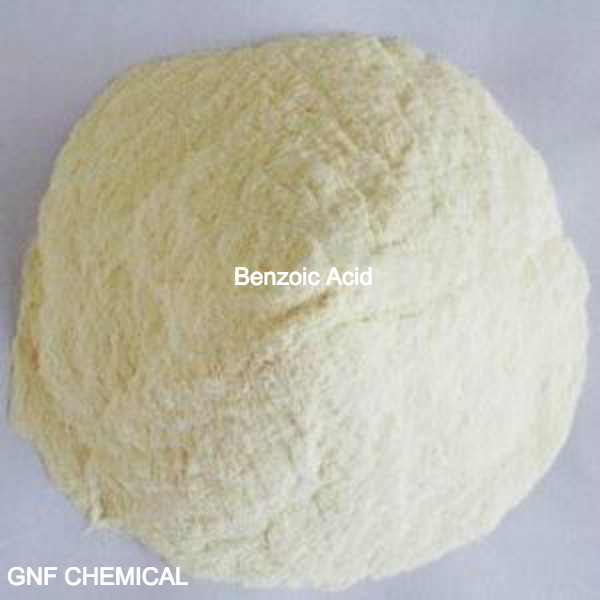
Preservatives Food Additives Grade Benzoic Acid CAS 65-85-0
Introduction Chemical name : Benzoic Acid CAS No. : 65-85-0                               EC NO : 203-618-2 Molecular Formula : C7H6O2 Molecular Structural Formula:  Molecular Weight : 122.12 g / mol Purity : Content:99.0-100.5% / Moisture:≤0.5% / Melting Point:121-123℃
read more
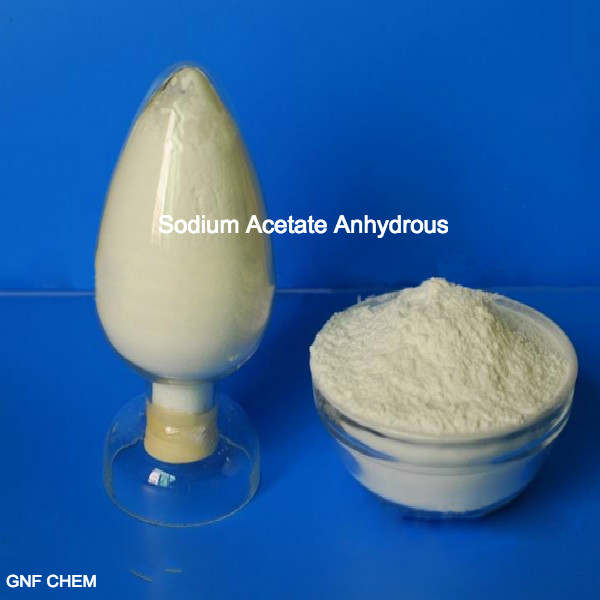
Thickening Agent Food Additives Sodium Acetate (Anhydrous) CAS 4075-81-4
Introduction Sodium acetate (CH3COONa) is the sodium salt of acetic acid. It appears as a colorless deliquescent salt with a wide range of applications. In industry, it can be used in textile industry to neutralize sulfuric acid waste streams and as a photoresist upon using aniline dyes. In concrete industry, it can be used as a concrete sealant to mitigate the water damage. In food, it can be used as a seasoning. It can also be used as a buffer solution in lab. In addition, it is also used in heating pads, hand warmers and hot ice. For laboratory use, it can be produced by the reaction between acetate with the sodium carbonate, sodium bicarbonate and sodium hydroxide. In industry, it is prepared from the glacial acetic acid and sodium hydroxide.
read more
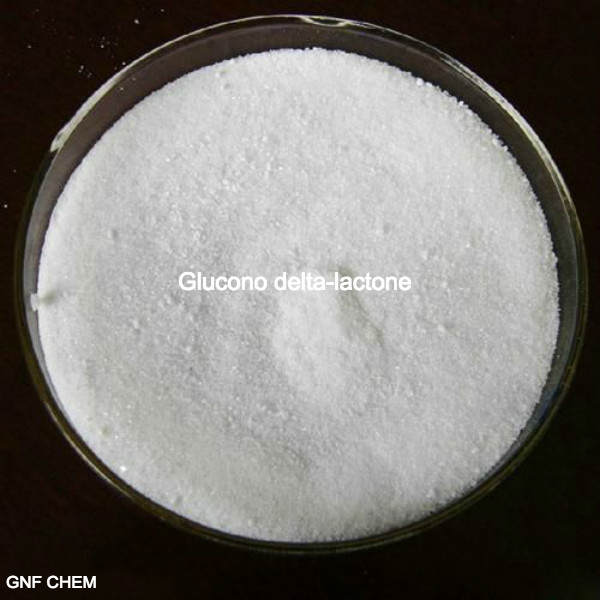
Food Additives Grade Antioxidant Glucono-Delta-Lactone(GDL) CAS 90-80-2
IntroductionGlucono delta-lactone (GDL), also known as gluconolactone, is a food additive with the E number E575 used as asequestrant, an acidifier,or a curing, pickling, or leavening agent. It is alactone of D-gluconic acid. Pure GDL is a white odorless crystalline powder.GDL is commonly found in honey, fruit juices, personal lubricants, wine and has been marketed for use in feta cheese.
read more
Acidity Regulators Food Additives Grade Sodium Propionate CAS 6132-04-3
Introduction Calcium Propionate Powder Sodium propanoate or sodium propionate is the sodium salt of propionic acid which has the chemical formula Na(C2H5COO).It is used as a food preservative and is represented by the food labeling E number E281 in Europe; it is used primarily as a mold inhibitor in bakery products. It is approved for use as a food additive in the EU, USA and Australia and New Zealand.
read more
Food Additives Grade Preservative Sodium Benzoate CAS 532-32-1
Introduction Sodium Benzoate has been extensively used for many years as a preservative to control microbial growth. It is used in the food and beverage industries, pharmaceuticals, cosmetic products, corrosion inhibitors in automotive and other antifreeze products. A range of high quality benzoic acid grades are offered to meet the different demands.
read more
Food Additives Food Grade Calcium Propionate CAS 4075-81-4
Introduction Calcium propionate is white crystalline, granular or crystalline powder, odorless or wih a slight acid odor, stable in heat and light, easy to dissolve in water.
read more
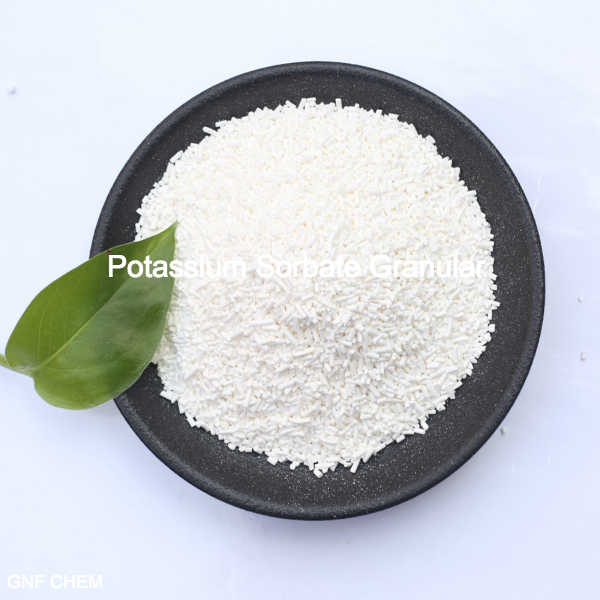
Preservatives Food Additives Potassium Sorbate Granular CAS 590-00-1
Introduction Potassium sorbate is produced by neutralizing potassium hydroxide with asorbic acid. It is white or off white granular or powder. Potassium sorbate is used to inhibit molds and yeasts. It is considered to be safe because of its long term safety record and non-toxic profile, the toxicity is 1/40 times than sodium benzoate.
read more

Need Help? Chat with us

leave a message
If you are interested in our products and want to know more details,please leave a message here,we will reply you as soon as we can.
Submit
Looking for Contact
Contact us #
+86 551 63500087

Home

products

WhatsApp

contact

Start a Conversation

Hi! Click one of our members below to chat on